
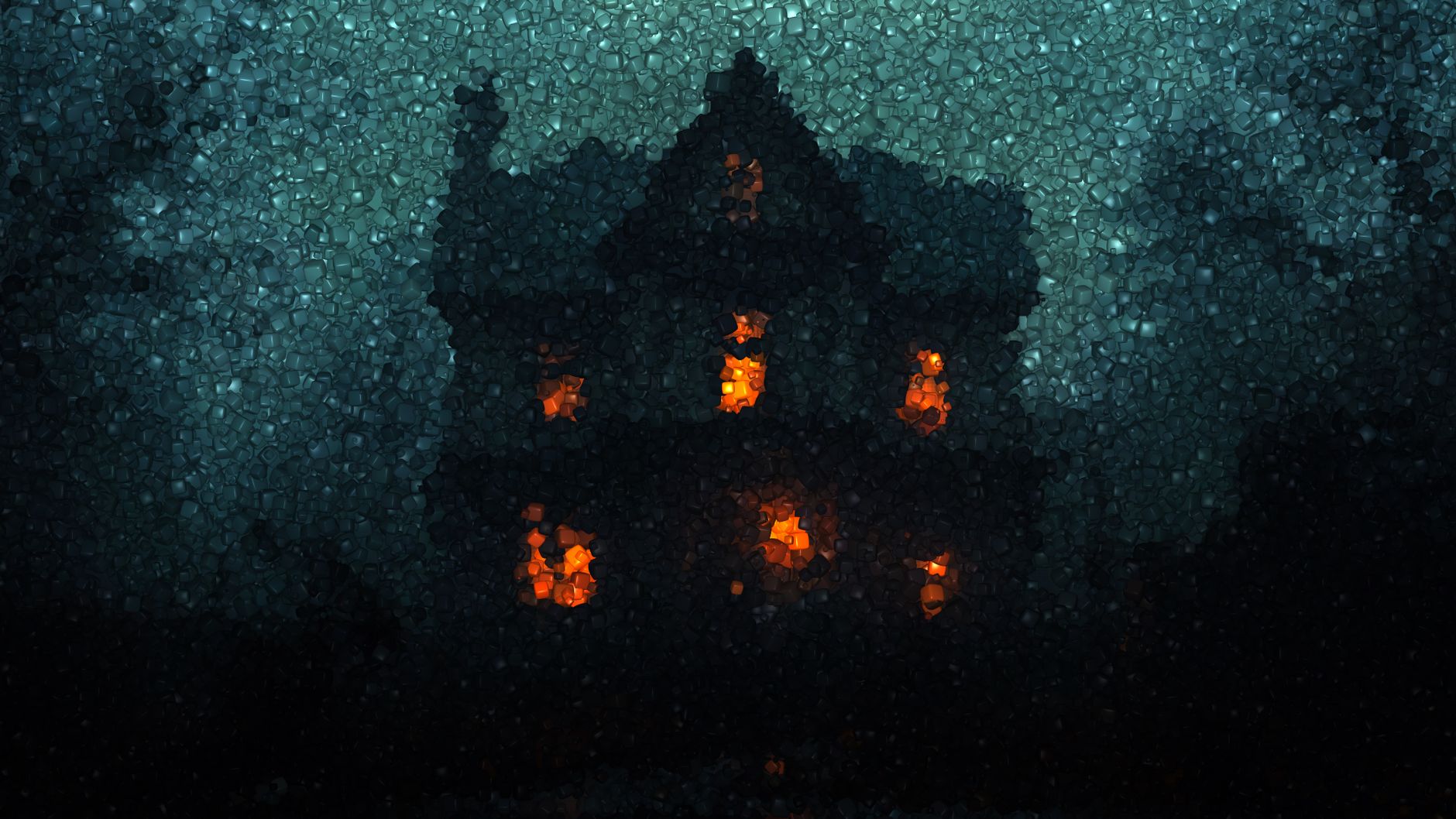
Here is the honest part. Your body does basically the same thing in a haunted house that it does at 11 PM on a Tuesday when you cannot stop thinking about that email you sent. Heart rate climbs. Breath gets shallow. Muscles tense. Attention narrows. From a purely physical standpoint, these two experiences are close cousins.
So why does one feel like a fun night with friends and the other feel like misery you cannot escape? The answer is one of the most useful distinctions in all of mental health, and it has very little to do with willpower or being tougher. It is about the difference between fear and anxiety.
The Core Difference
Fear is your body’s response to a real, present, specific threat. A clown jumps out of a doorway. A car swerves into your lane. A dog growls at your leg. Your nervous system fires, you react, the moment ends, and your body resets. Fear is short, loud, and specific. It is also, in the right context, kind of fun. The whole appeal of haunted houses, roller coasters, and horror movies is that we can experience the physiological rush of fear while knowing on some level that we are safe.
Anxiety is different. Anxiety is your body’s response to a threat that is not actually here, might not ever come, and cannot be dealt with by running or fighting. The email you sent six hours ago. The presentation next Thursday. The weird text from your friend that could mean nothing or could mean something. The feeling that you forgot to do something important but you cannot remember what. Anxiety does not have an end point built in. It just sits there, keeping your nervous system activated for hours or days at a time.
That is why one feels fun and the other feels awful. The physiology is similar. The context is completely different.
Why Haunted Houses Work
The clinical term for enjoying scary things in safe contexts is sometimes called “benign masochism.” The idea is that your brain gets to experience the full physiological rush of a stress response while simultaneously knowing you are not in actual danger. That combination releases dopamine, builds a sense of mastery, and often ends in relief and laughter.
A few things make this possible. The threat has clear boundaries. The haunted house ends. The movie finishes. The ride stops. Your brain knows that the scary thing has a start and an end, which lets your nervous system fully release once the moment is over.
The threat is chosen. You paid for the ticket. You bought the movie. You stood in line. Choice fundamentally changes how your body processes the stress. You are not helpless. You are participating.
The threat is social. You are usually with other people. Shared fear bonds humans in powerful ways, which is why horror movies on dates are a thing. Laughing together after the scary moment reinforces the sense that you got through something together.
The threat is physical. Fear is a body based response. When the moment ends, your body can shake it off through movement, laughter, or deep breath. The energy has somewhere to go.
Tuesday night worry has none of these features.
Why Tuesday Night Worry Feels So Different
If you are lying in bed at 11 PM running through everything that might go wrong tomorrow, your body is doing almost exactly what it would do in a haunted house. The problem is that none of the things that make haunted house fear fun are present.
There is no clear end point. The worry just keeps going. You cannot see when it will stop.
You did not choose this. You are not opting in. You just want to sleep and your brain will not let you.
You are alone. Not in a social, bonding kind of way. Just alone in the dark with your own anxious thoughts.
There is nothing physical to do about it. The threat is not in the room. You cannot run from it. You cannot fight it. You cannot even confirm whether it is a real threat at all.
Your body gets all the physiological consequences of fear, with none of the context that makes fear tolerable, let alone fun.
This Is Why “Just Stop Worrying” Does Not Work
If someone tells you to just stop worrying, they are essentially asking you to override an active threat response in your nervous system with pure willpower. That does not work. You cannot white knuckle your way out of a sympathetic nervous system activation. It is not a thinking problem. It is a body problem, and it needs body based interventions to actually shift.
This is also why “exposure therapy” for anxiety does not mean subjecting yourself to the thing you are anxious about and powering through. Good anxiety treatment works with the nervous system directly, teaches your body that it is safe, and gradually builds the capacity to be present with uncomfortable feelings without needing them to go away immediately.
What Actually Helps With Anxiety
A few honest things that tend to help with anxiety more than willpower does.
Giving the worry a container. Setting aside a specific 15 minute “worry time” during the day where you let yourself worry on purpose can paradoxically reduce how much the worry invades the rest of the day. The brain feels less urgency to interrupt you with worries when it knows there is a scheduled time coming.
Working with the body first. Slow breath, especially long exhales. Physical grounding. Walking. Cold water on your face. Anything that signals safety to your nervous system before you try to think your way through anything.
Narrowing the time horizon. Anxiety lives in the future. The more you can bring your attention to right now, just this moment, just this breath, the less fuel the anxiety has.
Naming it out loud. “I am anxious right now and my body thinks something is wrong.” Just the act of labeling the experience shifts activity in the brain from threat response areas to language and reflection areas.
Not fighting it. The more you tell yourself you should not be anxious, the more anxious you tend to become. Letting the anxiety be present, acknowledging that it is uncomfortable, and continuing with what you were doing tends to work better than trying to force it away.
Therapy. For a lot of folks, anxiety has roots in old patterns, past experiences, or an overactive nervous system that has been running on high alert for years. A therapist trained in anxiety work can help you build a different relationship with the whole experience.
The Point of Knowing the Difference
Understanding that your Tuesday night worry is anxiety and not fear is not just a semantic exercise. It changes what you do with the experience.
When you treat anxiety like fear, you look for the threat and try to eliminate it. But there is no threat to eliminate. So you spiral.
When you recognize anxiety for what it is, you can stop trying to solve for a problem that is not actually in the room, and start working with your nervous system instead. That shift changes everything.
Fear can be fun because it ends. Anxiety is hard because it does not. But the good news is that anxiety is treatable. The nervous system is trainable. And your relationship with your own body does not have to feel this exhausting.
Looking for Therapy in Manchester, NH?
At Care Pack Counseling, we work with a lot of clients navigating anxiety, panic, chronic worry, and the kind of nervous system activation that keeps people awake at night. Our clinicians use evidence based approaches including CBT, DBT, ACT, EMDR, and IFS. We bring real warmth and real understanding of how exhausting anxiety can be.
We see clients in person at our Manchester office on Elm Street, and virtually throughout New Hampshire, Massachusetts, and Maine. Whether you are in Manchester, Bedford, Concord, Nashua, the Seacoast, or anywhere across our three state coverage area, we would love to meet you.
Our 48 Hour Callback Promise
Reaching out for therapy when you are already overwhelmed is hard. That is why we promise to respond to every new client within 48 hours. If we do not, your first session is on us.
Contact and Insurance
Care Pack Counseling 923 Elm St, Unit 78 Manchester, NH 03101 (978) 245-7163 info@carepackcounseling.org carepackcounseling.org
We accept Anthem Blue Cross Blue Shield, Harvard Pilgrim, Aetna, and Cigna. Sliding scale fees are available for clients paying out of pocket. Licensed across New Hampshire, Massachusetts, and Maine, with in person sessions in Manchester and virtual sessions available throughout our three state coverage area.
Join The Care Pack
A haunted house ends when you walk out the exit. Anxiety does not have an exit built in. But you can learn to work with it, and you do not have to figure it out alone.
Leave a Reply