
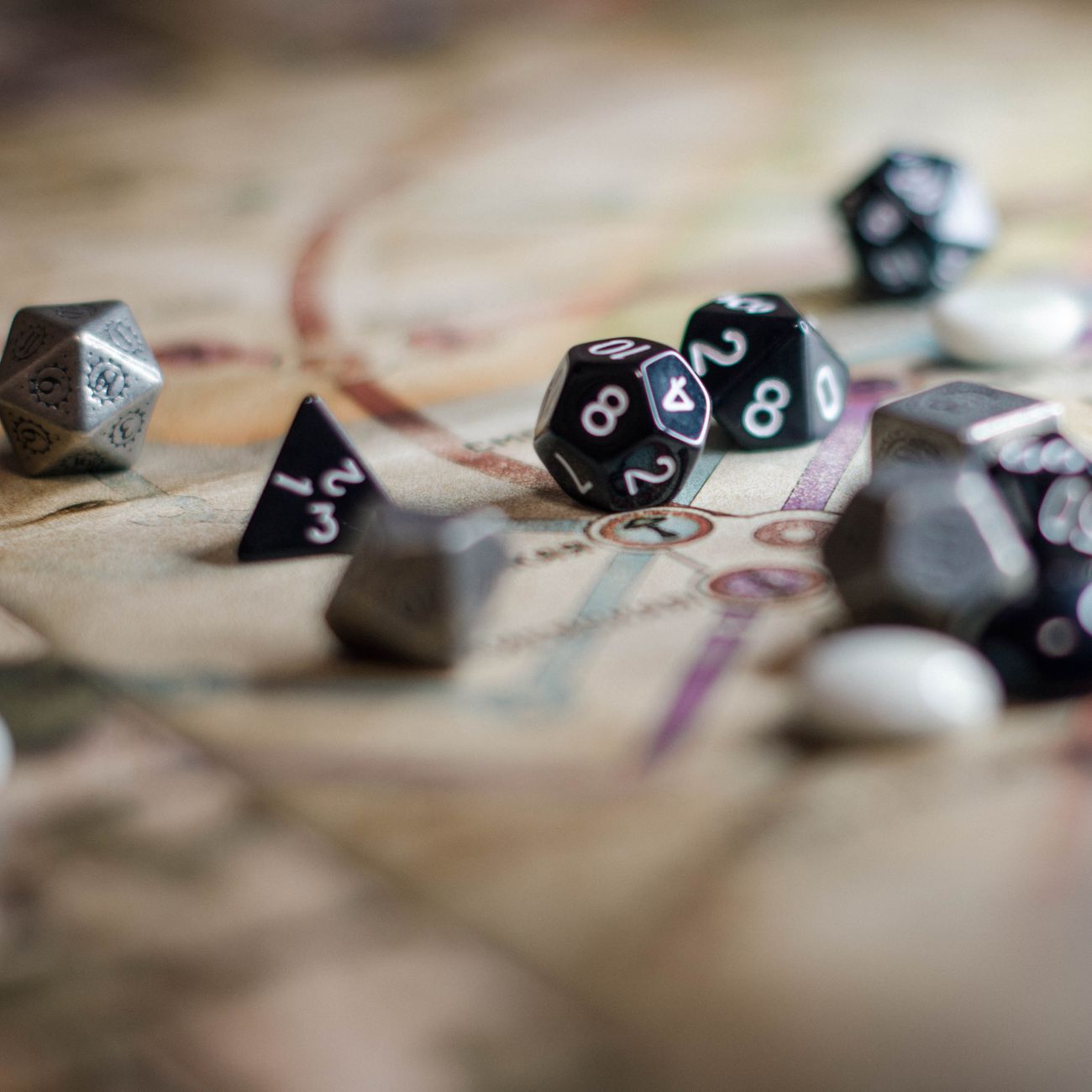
If you’d told me ten years ago that tabletop roleplaying games would be a topic taken seriously by clinicians, I would have thought that was a niche take. Now there’s a growing body of research, a global movement of therapists incorporating games into their practice, and thousands of people finding that sitting around a table pretending to be a wizard is one of the most useful things they do all week for their mental health.
If you play D&D, Pathfinder, Call of Cthulhu, or any of the newer indie roleplaying games, you may already know why. If you don’t, and you’re skeptical, stick with me. There’s real substance here, and it might be worth exploring, especially if you’re navigating social anxiety, loneliness, depression, or the general sense that connection is harder than it used to be.
What Actually Happens When You Play
For anyone unfamiliar, tabletop roleplaying games are collaborative storytelling with a rule structure. A group of players creates characters. One person, usually called a Dungeon Master or Game Master, runs the story and the world. Together, the group navigates challenges, makes decisions, and creates a story none of them could have made alone. Games can last a single evening or run for years.
Here’s what’s happening under the surface while all of that is going on:
You’re practicing social skills in a low pressure container. The character gives you distance. It’s not you asking the innkeeper for a room. It’s your character. That small psychological gap makes it easier to try things you might not try as yourself. Speaking up. Being assertive. Being silly. Being vulnerable. Over time, some of that transfers back to you outside the game.
You’re building empathy and perspective taking. Playing a character requires you to imagine yourself into someone else’s experience, motivations, and fears. That’s exactly the same cognitive muscle empathy runs on. Regular practice strengthens it.
You’re getting reliable connection. For a lot of folks, a weekly game becomes one of the most consistent social experiences in their week. It happens whether or not you feel like leaving the house. It gives you people to see, laugh with, and worry alongside. That kind of steady community is protective for mental health in real, measurable ways.
You’re exercising creativity that most adult life doesn’t ask for. Adulthood tends to squeeze out imaginative play. RPGs put it back. Even people who don’t consider themselves creative often find that regular play unlocks something.
You’re processing hard stuff obliquely. Sometimes it’s easier to explore grief, anger, fear, or shame through a character than to talk about it directly. Fiction gives us distance, and distance sometimes gives us access.
Why It Works Especially Well for Certain People
Some populations tend to benefit particularly from tabletop RPGs. Not exclusively, but noticeably.
People with social anxiety. The structure of a game removes a lot of the ambiguity that makes social situations hard. There are turns. There are rules. There’s a clear activity to focus on that isn’t “make small talk.” Many socially anxious folks find they can be more themselves at a game table than at a party.
Neurodivergent folks. The clear structure, the interest driven engagement, and the freedom to hyperfocus on something meaningful make RPGs a natural fit for a lot of autistic, ADHD, and otherwise neurodivergent players. There’s real research on this.
LGBTQ+ folks, especially those exploring identity. Characters can be an early way to try on identities that don’t yet feel safe to explore in real life. Many folks describe their first out gay, trans, or nonbinary experiences happening through a character before they happened in their actual life.
People who’ve experienced trauma. With the right group and the right game, RPGs can offer a controlled space to work with themes of powerlessness, agency, safety, and recovery. This isn’t a replacement for therapy, but it can be a powerful complement.
Lonely adults. Anyone struggling to make friends as an adult (which is most of us) may find that a regular game group becomes the most reliable social connection they have.
The Research Is Real
This isn’t just anecdotal. Studies have shown that participation in tabletop roleplaying games correlates with reduced anxiety and depression symptoms, improved social skills, greater empathy, and higher self esteem. There are now certified therapeutic game masters trained to run games specifically for mental health purposes, and clinicians around the world are integrating RPGs into their work with kids, teens, and adults.
The American Psychological Association has published on this. Bonnie Hillman Shay and others have built entire clinical practices around it. There’s a whole professional organization called Game to Grow doing important work in this space. Whatever your assumptions about D&D might have been ten years ago, the field has moved.
What to Look for If You Want to Try It
If you’re curious about trying tabletop roleplaying games for the first time, or coming back after years away, a few honest thoughts:
Start with a beginner friendly group. Not every table is welcoming. Look for groups that specifically say they welcome new players. Local game stores often run beginner nights. Manchester has a few good options, and the Nashua and Concord areas have active communities too.
Consider online play if in person feels like too much. Platforms like Roll20 and Foundry make it easy to play from home. This can be an easier entry point for anyone with social anxiety, chronic illness, or a schedule that doesn’t allow for in person games.
Look for a “session zero.” Good groups start with a conversation about what everyone wants from the game, what topics are off limits, and how the group will handle conflict. If a group skips this, it’s a yellow flag.
Trust your gut about the group. If the vibe feels off, if there’s anyone making the table unsafe, if the game master is dismissive of your character or your comfort, you can leave. You will find another group.
Don’t feel like you need to know the rules. Nobody comes in knowing everything. Good tables are patient with new players. If a group makes you feel dumb for asking questions, they’re not the right group.
When to Bring It to Therapy
Playing games doesn’t replace therapy. Nothing does the work therapy does. But games can support the work, and the work can support the games. If you notice that certain themes keep coming up for your character (grief, powerlessness, betrayal, longing to be seen), that’s often meaningful information about what’s alive for you in your actual life. Bringing that material to therapy can deepen both experiences.
Some clients I’ve worked with have used their character as a bridge into topics they couldn’t approach directly. “My character keeps trying to save everyone” can become a way into “I keep trying to save everyone.”
Looking for Therapy in Manchester, NH?
At Care Pack Counseling, we work with clients navigating social anxiety, loneliness, identity exploration, depression, ADHD, autism spectrum experiences, and the broad territory of feeling disconnected in modern life. Our clinicians take creative approaches seriously, and we honor the tools that support your wellbeing outside of session. Our team uses evidence based approaches including CBT, DBT, ACT, EMDR, and IFS.
We see clients in person at our Manchester office on Elm Street, and virtually throughout New Hampshire, Massachusetts, and Maine. Whether you’re in Manchester, Bedford, Concord, Nashua, the Seacoast, or anywhere across our three state coverage area, we’d love to meet you.
Our 48 Hour Callback Promise
Reaching out for therapy is one of the harder rolls you’ll make. That’s why we promise to respond to every new client within 48 hours. If we don’t, your first session is on us.
Contact and Insurance
Care Pack Counseling 923 Elm St, Unit 78 Manchester, NH 03101 carepackcounseling.org
We accept Anthem Blue Cross Blue Shield, Harvard Pilgrim, Aetna, and Cigna. Sliding scale fees are available for clients paying out of pocket. Serving clients in person in Manchester, NH and virtually throughout New Hampshire, Massachusetts, and Maine.
Play is not a lesser form of self care. For a lot of people, it’s the most important one.
Leave a Reply